Booking decision guide

Madeira roads in a hire car

Choose the car after deciding which Madeira roads you will actually use. Main roads connect the airport, Funchal and much of the island, but side roads can be steep, narrow and winding. Match the gearbox, vehicle size and luggage load to the driver, then check accommodation access and the booked return before paying. An automatic can ease repeated hill starts; a manual can work well for a confident driver who uses low gears on descents.

Updated

Editor: Ane

Plan the trip
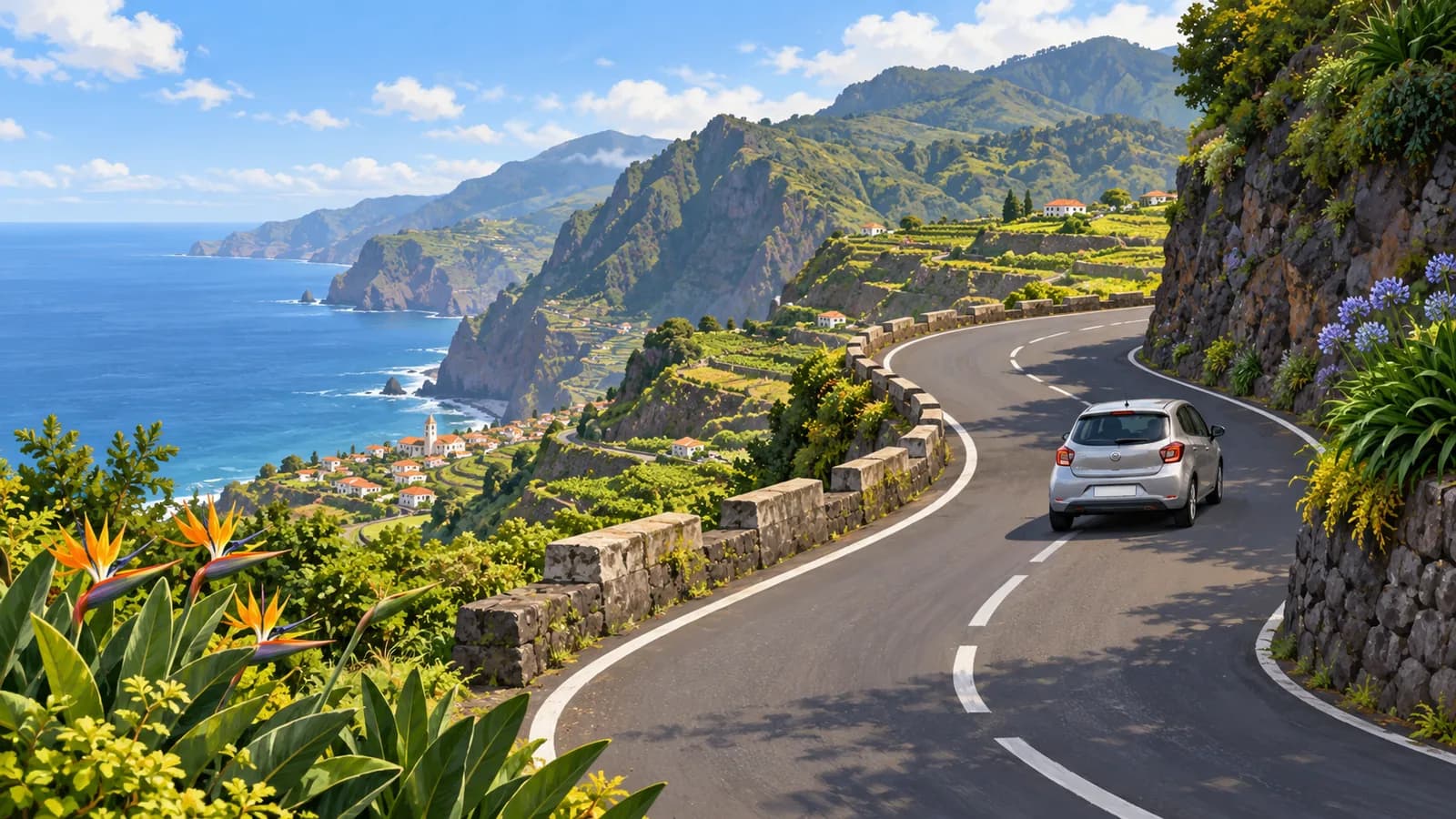
Illustration of a compact hire car on a winding paved Madeira hillside road above the Atlantic

Road choice

Use main roads when a navigation shortcut looks unusually steep or narrow

Downhill control

Use lower gears rather than depending only on the brakes

Car fit

Choose transmission and load capacity for the actual driver and passengers

Funchal stay

Confirm accommodation parking before paying for idle car days

Choose the route before the vehicle

The journey from Madeira Airport to Funchal is a different drive from a mountain accommodation approach or a day crossing the island. Identify the overnight bases and any steep access roads before comparing vehicle groups.

Useful next steps: Plan Madeira Airport collection, Compare the Portugal gateways

Start with the first real driving day

If the first nights are central Funchal days, compare airport transport and a later city collection with the total cost of an airport rental sitting parked. If the trip begins at a hillside villa or goes onward immediately, airport collection can avoid a second transfer. Put flight arrival, baggage, the operator handover and a comfortable first drive on the same timeline. Do not assume every Funchal-labelled offer uses a central depot; inspect its address before choosing it.

Avoid a shortcut that changes the risk

Madeira's road network has major paved connections, but navigation can suggest impractical steep or narrow side roads. A short map distance is a poor proxy for an easy drive. Ask the accommodation for its preferred car approach, then compare it with the main signed road before the first trip. ER101 runs around the coast, while ER103 crosses higher ground between Funchal and Faial; those are route names, not promises of equal driving difficulty.

Match the gearbox to the driver's hill comfort

Transmission is a driver-control decision, especially when the route includes repeated slopes. The booked category must explicitly include the gearbox you need; a request made at the counter is too late to rely on.

Useful next steps: Compare vehicle groups and luggage

Automatic for frequent starts and unfamiliar slopes

An automatic removes clutch management in stop-start traffic and on an uphill departure. That can reduce workload for a driver unused to steep roads, but it does not make a narrow bend wider or compensate for poor visibility. Check whether the offered car has a selectable lower range or another method for engine braking on descents, and learn the controls before leaving the depot. Price the actual automatic category with the full passenger and baggage load rather than assuming it is available in every small-car group.

Manual for drivers who can use it confidently

A manual can give direct control of a low gear on a long descent, matching Madeira's advice to use the gearbox instead of relying only on the brakes. It also demands smooth hill starts, safe spacing and attention to the road. If the driver is not comfortable restarting on a slope with a loaded car, select an automatic offer or simplify the route. Do not book manual for a marginal saving if the trip then depends on another unregistered driver taking over.

Judge engine fit with the whole load

Engine capacity alone cannot settle the choice. Rental listings usually promise a group or similar car, not a particular engine. Compare the real occupants, cases, route and gearbox before accepting a small category.

Useful next steps: Compare full Madeira rental cost

Check passengers, cases and power delivery together

A compact vehicle may be easier on tight streets, but a full party and large bags increase the load on a climb. Ask the supplier what category and transmission the offer guarantees, and compare its stated seating and luggage allowance with your actual cases. If luggage blocks rear sight lines or cannot fit with the boot shut, move up a group. If steep accommodation access is unavoidable, consider a vehicle with enough power for that load; do not invent a minimum engine size from a rental-group name.

Do not equate a larger car with a better island car

A bigger SUV may carry more luggage but can be harder to position on a narrow approach or in a small parking bay. Four-wheel drive is not a permit for a closed road, track or unsuitable route. A smaller car with appropriate transmission can be easier for urban and coastal driving when everyone fits. Compare the vehicle's width, luggage capacity, deposit and fuel costs, then decide which constraint actually matters. A familiar driving position and clear outward view may matter more than a marketing label.

Plan the steep sections and descents

On steep descents, use lower gears instead of depending only on the brakes. A navigation shortcut onto a very steep or narrow road can change the driving task. Carry those realities into the rental decision, not just the day-of-drive plan.

Useful next steps: Check arrival and return timing

Use a low gear before the descent

Select a suitable lower gear while the vehicle is under control, then descend at a speed that allows a safe stop within the visible road. Repeated heavy braking can increase heat and reduce the margin for a later bend. On an automatic, learn the available manual or low-range mode from the vehicle instructions rather than guessing at the selector while moving. If the route feels beyond the driver's skill, turn back at a safe place and use an easier road.

Allow space on narrow uphill and downhill roads

On a steep road too narrow for two cars to pass, slow early and use a safe passing place. Follow any signed priority and leave enough room for the other driver to manoeuvre; never force a passage because your direction seems easier. Extra vehicle width and a full boot can make a blind bend harder. A daylight trial of the accommodation access is preferable to finding it for the first time after a late flight. If the approach feels unsafe with the booked vehicle, use a more suitable route or ask the accommodation for advice before continuing.

Keep mountain weather and road access flexible

A paved route can become unsuitable during wind, heavy rain, low cloud or a temporary closure. Check current road restrictions before a mountain leg; a past closure is evidence that access can change, not a forecast for your dates.

Useful next steps: Check vehicle limits and load

Check the named road, not just the destination

The ER103 reaches the higher route between Funchal, Poiso and Faial; ER104 crosses Ribeira Brava to São Vicente. A driver should check the specific road status and the forecast before a mountain leg, then choose a lower or coastal alternative if conditions deteriorate. Do not make a flight return depend on crossing an exposed high route on the final morning. Leave time for a changed path and refuelling at the agreed return point.

Treat a closure as a hard boundary

Road closures may follow snow, landslip, works or other conditions. A rental category, even a four-wheel-drive vehicle, does not override a closure or the operator's permitted-road terms. Stop at signs and current official notices. If a planned accommodation or activity requires an unavailable road, change the plan and contact the relevant provider. A route that looked open at booking can change, so use live information close to travel.

Decide whether Funchal parking changes the hire duration

Parking matters here because it can change when the rental should start and how the car is used. A city base with walking days may need fewer rental days than an island itinerary with changing accommodation.

Useful next steps: Compare airport and city starts, Compare pickup timing

Confirm a usable space before booking the car days

Ask your accommodation whether a space is included, its entrance, height and width limits, and whether access is steep. Some white spaces marked M are reserved for residents, blue spaces can be paid and yellow markings prohibit parking. Do not assume a free street bay near the hotel. If the booked car will sit while the party explores Funchal on foot, compare a later collection and the transport to that branch.

Build parking and timing into the full cost

An airport car can still be the right choice if you leave Funchal often, have multiple overnight bases or need it for luggage. Add the accommodation charge, any paid parking, fuel, card hold, cover and extra rental days to the comparison. A city collection is useful only if the actual offered branch can be reached with your bags and is open when the driving days begin. Make the last return match the selected location; a Funchal branch and the airport are separate end points unless the selected quote includes that return.

Check rental terms before leaving the collection point

The road plan and the rental contract must agree. Permission for a route, a ferry or a different return cannot be inferred from the vehicle's capability or a branch name.

Useful next steps: Check the rental agreement

Read the offer beside the route

Check the named operator, desk or meeting point, exact return, mileage, fuel policy, deposit, excess, exclusions and roadside-assistance area. Inspect tyres, wheels, glass and existing body marks before departure. Ask how the company treats damage from gravel, water or the underbody, and whether it excludes particular surfaces. A damage waiver can reduce a financial excess while leaving a prohibited-road term in force. Keep the signed condition report and photographs.

Keep Porto Santo as a separate decision

A ferry ticket for a vehicle does not authorise a rental car to board. The Porto Santo operator handles vehicle travel, but the hire firm may restrict territorial use or require written approval. If the trip includes Porto Santo, obtain the exact supplier's permission and cover terms before paying for a vehicle ferry fare. A separate island rental or travelling as foot passengers may be simpler. Do not assume the mainland Portugal agreement applies across either island.

Finish with the booked return, not a map pin

Return planning deserves the same attention as the first climb. The location in a search may represent an airport or city area; the voucher supplies the actual operator bay or depot.

Useful next steps: Plan Madeira Airport return, Estimate the complete hire cost

Leave time for the chosen return route

Plan the final fuel stop under the contracted policy, then navigate to the operator's stated entrance. An airport return can require a dedicated rental bay, vehicle check or shuttle, and a Funchal city return can have different hours. Do not treat the passenger drop-off as a car-return area. If a road closure or weather delay threatens the handback, contact the supplier before the agreed time rather than assuming the desk will remain open.

Keep a complete handback record

Photograph the final condition, mileage and fuel level, follow the key-drop process if approved and retain any return receipt. Check the payment statement after travel for fuel, excess, late return or other allowed charges. A smooth physical handover does not mean the final bill is complete immediately. Keep the same pickup and return locations in the comparison unless a different-station quote explicitly covers the change.

Questions to settle before booking

Use the answers to identify the checks that matter. Check the selected supplier terms and current local rules before booking.

Do I need an automatic hire car for Madeira?

No single gearbox is required. An automatic can reduce hill-start workload; a confident manual driver can use low gears on descents. Book the transmission you can drive safely and confirm it in the offer.

What engine size should I book for Madeira's hills?

There is no reliable universal engine-size threshold. Match the offered vehicle group to passengers, bags and the actual climbs, and ask about power and transmission when a fully loaded car must reach steep accommodation access.

Are Madeira's main roads all steep and narrow?

No. Main paved routes and smaller mountain or accommodation roads differ. Check the named route and avoid an impractical navigation shortcut when a main road works better.

Should I collect at Madeira Airport for a Funchal stay?

Collect at the airport if the road trip starts on arrival. If the opening days are mostly in Funchal, compare transport and a later confirmed city branch with rental days and parking.

Can I drive a Madeira rental onto the Porto Santo ferry?

Only if the selected rental company authorises that vehicle and crossing in writing and the ferry booking accepts it. A vehicle ferry fare alone does not grant rental permission.