Split Port
Best for: road travel beginning after a ship call rather than after a hotel stay
The port label does not establish a desk on every pier.
Split Port car hire is for a traveller whose next step after a ship arrival is a mainland road trip or an approved vehicle-ferry itinerary. The passenger harbour is near Split’s bus and rail stations, but its piers and traffic lanes are not one universal rental counter. Confirm the booked company’s meeting address, vehicle collection area and transfer from the correct ship. A foot passenger visiting Split’s old centre may not need a car until later. If the rental will board another sailing, both the ferry operator and the car supplier must accept that plan, including return timing and cover.
Preparing live car hire search
Search starts at Split Port, with the same return location and EUR as the requested currency. Check the exact branch, collection instructions and full conditions in the selected offer.
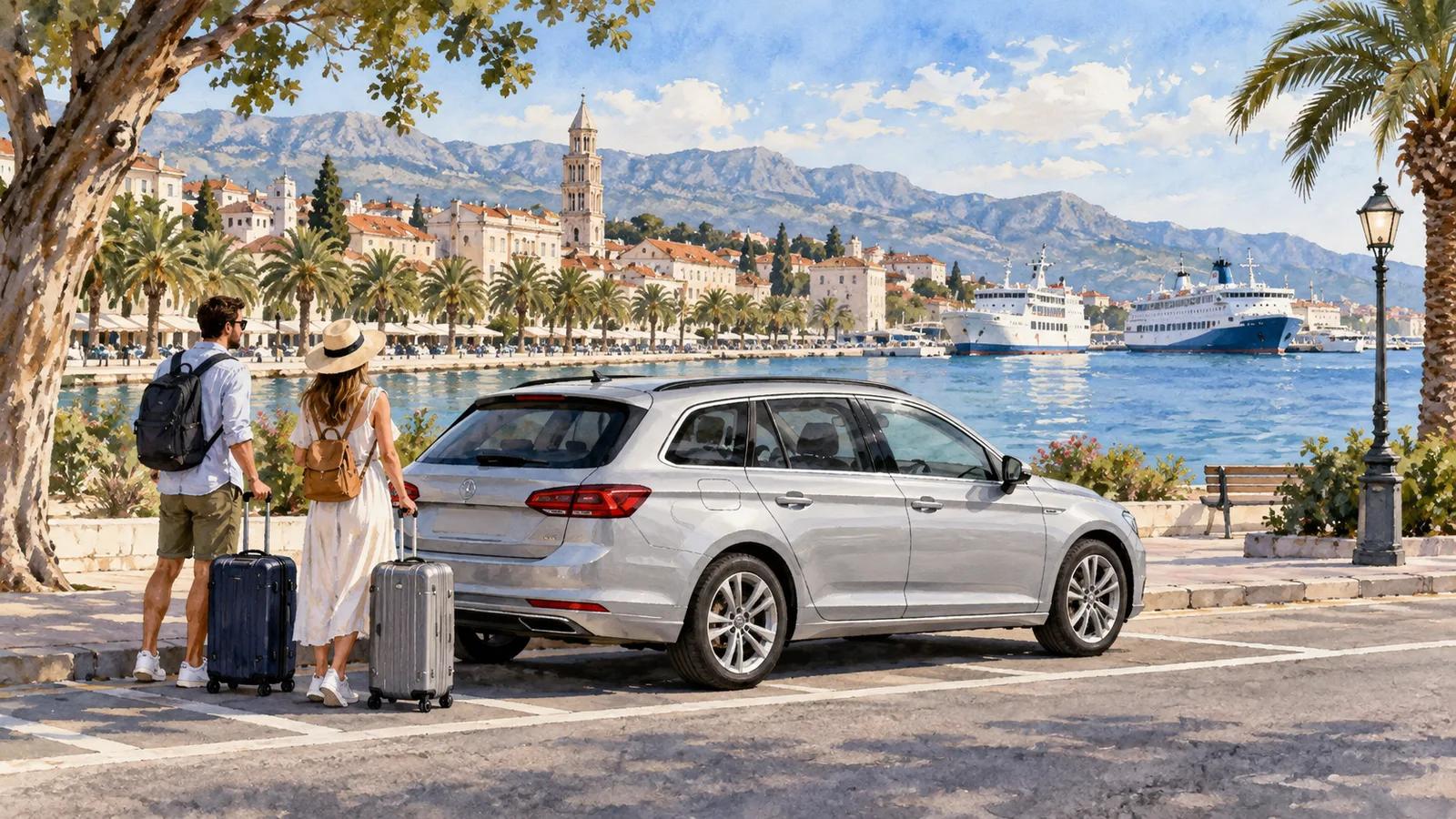
Best for: road travel beginning after a ship call rather than after a hotel stay
The port label does not establish a desk on every pier.
Split has multiple passenger movements in one busy harbour.
Split’s passenger harbour has several piers, so match your vessel and landing point to the rental company’s named meeting address. Confirm whether the operator expects a walk, representative or shuttle, and save the instructions offline. A port search result alone does not tell you which vehicle bay will hold the car.
Compare a city officeScheduled docking is not the same as being free of the ship and ready to collect. Allow for baggage, border formalities if relevant, walking between piers and the operator’s handover process. If arrival is late, agree on what happens to the booking rather than assuming the office or representative will wait indefinitely.
A first afternoon in Split may be better on foot.
The Riva and historic core are near the harbour. For an old-town stay, compare keeping bags at accommodation and collecting from a later town branch against paying for a car and parking. An immediate port rental makes more sense when a confirmed mainland drive follows disembarkation.
Compare total hire costFor a coast or inland departure, leave a realistic margin after the sailing for documents, inspection and urban traffic. If the next ferry is also on the same day, check whether the car must be at a vehicle-loading queue earlier than foot passengers. Building a trip around minimum transfer times can put both reservations at risk.
Island and coastal plans require different reservations.
For Klis or a northbound coastal trip, save the first road junction and accommodation parking before collecting. Split harbour traffic can be busy around sailings; HAK conditions help with wider road disruption. A mainland route can avoid ferry paperwork entirely if the island leg is a passenger day trip.
Compare Croatia destinationsOmiš or a longer Makarska coast drive heads away from an inland Klis outing and needs its own timing. Choose a first overnight and its vehicle entrance before leaving the harbour, especially when traffic builds around departures. Check HAK for live road conditions and leave the port with a planned legal stop rather than improvising beside the ferry lanes.
Consider a land-side rentalA port pickup can be a poor moment to discover the wrong category.
Test the boot with all suitcases and child equipment, keeping the rear view usable. Photograph the car, wheel rims, fuel level and any existing marks at the operator’s vehicle bay. If a ferry crossing is planned, verify the actual car’s dimensions against the ticket rather than relying only on the booked category.
Choose a practical vehicleThe compact historic centre is better explored on foot. Ask accommodation for its legal unloading place and overnight garage, especially if returning from an island with late arrival. A signed, paid space is more useful than a map pin that leads into passenger traffic or a pedestrian lane.
Operator returns and passenger check-in are different steps.
The chosen supplier may receive cars at a city office, a garage or another address named on the voucher. Save the vehicle entrance and key instructions; the port authority does not accept rental returns for every company. If returning from a ferry, allow for disembarkation queues before the branch closes.
Refuel under the agreed policy, complete inspection or documented after-hours return, then walk or transfer to the correct departure pier. A return at SPU or another city must be included in a confirmed one-way booking. Current sailing and pier details take priority over an itinerary prepared weeks earlier.
Compare an airport drop-offThe quay does not change licence or card requirements.
Bring each named driver’s original licence and matching identity document. Croatian recognition of foreign licences depends on issuing state and reciprocity, while a supplier can impose its own accepted-format rules. Ask whether any international permit or translation is needed for your driver rather than applying one answer to every passport.
The lead driver needs a card the operator accepts and funds for its hold. Review excess, fuel, mileage, additional driver and child-seat terms for the exact offer. If the trip ends at a different branch, quote that drop-off explicitly; a port-facing pickup result alone says nothing about the return charge.
Cost the complete itineraryThe booked contract governs where the car can go.
A ferry ticket is a carrier purchase, not rental eligibility. Some vehicle sailings allow a reserved place while others board vehicles in arrival order, so check the actual line’s ticket and queue rules. Enterprise Croatia, for example, requires branch authorisation for vehicle-ferry travel; confirm the island, date and cover exclusions with your own supplier before collection.
An extension into Bosnia and Herzegovina or Montenegro can require approval, documentation and charges. Give the rental provider the countries and planned dates before paying, particularly if a coastal itinerary changes after the ferry. The closest road or ship connection is not evidence that the car is authorised to use it.
Check country driving choicesDo not assume a desk is beside your ship. The booking must identify the actual meeting point, transfer and vehicle bay.
Yes if the provider offers that handover and the branch is open after disembarkation. Keep a buffer beyond the scheduled docking time.
Only if the supplier permits vehicle carriage. Check the ferry line’s ticket and boarding rules; a vehicle ticket may not reserve your chosen departure.
Use the return address and bay on the confirmed agreement. Do not leave it in a ferry queue or unrelated city garage.
Choose your dates and compare the total price, pickup arrangements and rental conditions. Check the branch and return plan before confirming an offer.
Search Split Port car hire